When people talk about business loans without a credit check, they usually don’t mean no background research at all. The reality is that all lenders will want to know who they’re lending to. What you can look for, however, is business finance that doesn’t require a hard credit check: lenders that assess your current card sales, revenue, or outstanding invoices instead of pulling a full credit report.
What “no credit check” actually means for business loans
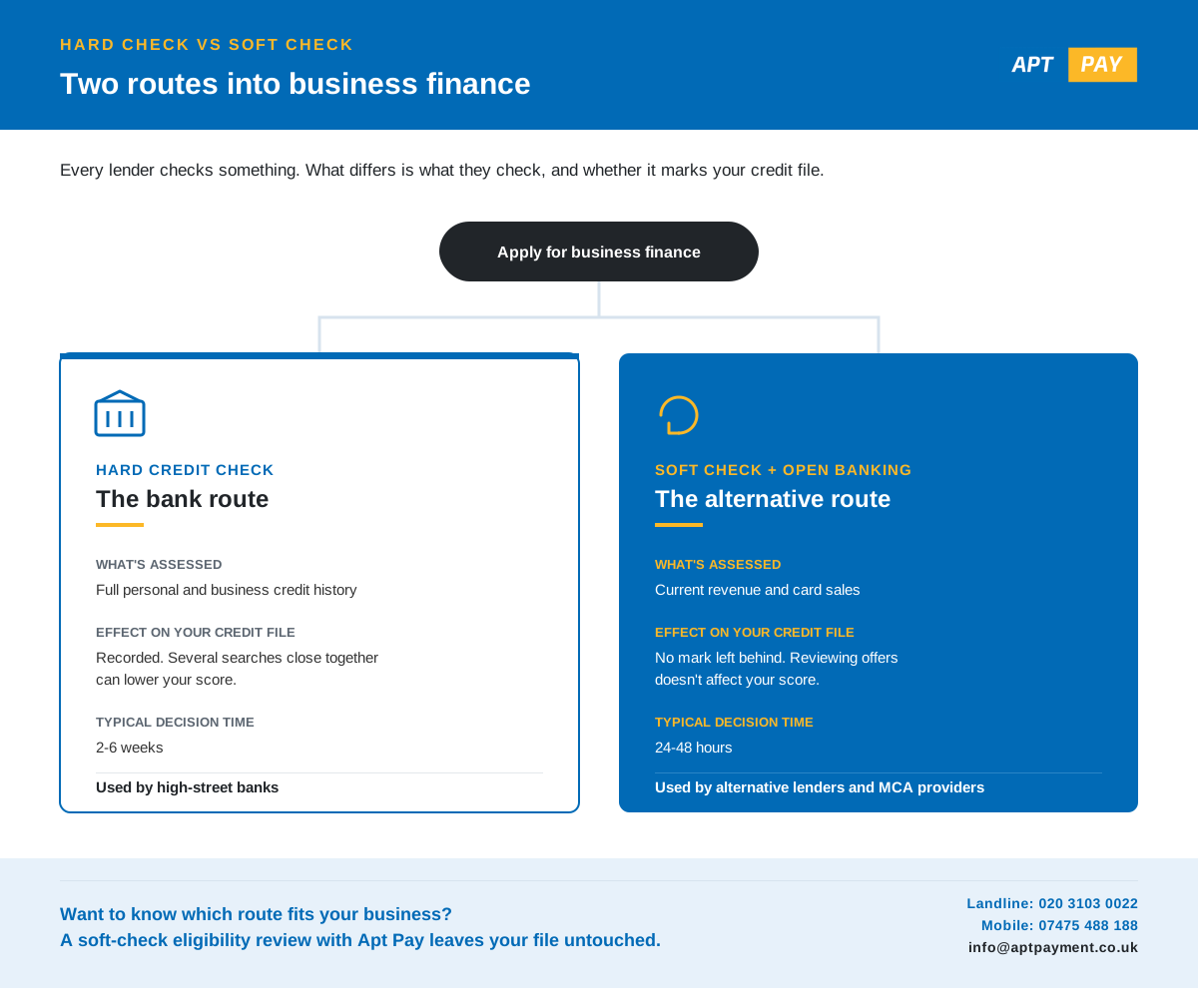
A hard credit check is a formal search recorded on your credit file. Multiple hard searches in a short period can reduce your credit score and signal financial distress to future lenders. Most high street bank loans require a hard check before they’ll proceed with an application.
A soft credit check, by contrast, leaves no trace on your credit file. Many alternative lenders and merchant cash advance (MCA) providers run a soft check, or no check beyond Open Banking, when reviewing an application. This means your credit file is not affected by exploring your options, and the lender’s decision is based on what your business is doing right now, not what happened to your credit in the past.
What lenders look at instead of a hard credit check
A soft check includes card sales and transaction history accessed via Open Banking; monthly revenue; time in business. The key distinction is that revenue-based lenders care about your business performance today, not historic credit events. Google’s own AI Overview makes this distinction when you search “no credit check business loans”: any lender still claiming to conduct zero checks of any kind is misleading you.
Candidates for a business loan with no hard credit check
Businesses with bad or poor credit history
County court judgements (CCJs), defaults, or a pattern of late payments make traditional bank loans unlikely, as banks weight credit score heavily. Revenue-based lenders and MCA providers put that history into the background and assess what your business turns over today.
A business with strong card revenue and six months of trading can access meaningful funding even with a poor personal or business credit record.
Businesses with no credit history
Start-ups and recently formed limited companies often lack the credit track record that traditional lenders need. If you’ve been trading for three to six months and taking card payments, that revenue data is what an MCA provider assesses. This makes MCA one of the most accessible products for newer businesses that can demonstrate consistent card income.
Businesses protecting their credit score
Established businesses that have made multiple finance enquiries recently sometimes want to explore options without triggering further hard searches. Soft-check eligibility tools and Open Banking-based lenders let you find out what’s available and at what cost before committing to a full application, keeping your credit file clean while you compare.
Types of business finance available without a hard credit check
Several product types fit this category, though not all are available to every business:
- Merchant cash advance (MCA): The most widely available no-hard-credit-check product. The lender assesses card transaction volume via Open Banking; repayments are a percentage of daily card sales. No fixed monthly payment, no interest — one agreed cost set at the start.
- Revenue-based finance: Similar to MCA but may draw from total business revenue rather than card sales specifically. Repayments scale with income. Suited to businesses with strong turnover across multiple channels.
- Invoice finance: Turns outstanding invoices into immediate cash. The lender assesses the value and reliability of the invoices rather than the borrower’s credit score. Relevant for B2B businesses waiting on customer payment.
- Asset finance: Uses business equipment, vehicles, or machinery as collateral. The asset’s value reduces the lender’s risk, making credit history a secondary factor. The asset being purchased can sometimes serve as security.
- Short-term unsecured loans from soft-check lenders: Some specialist lenders use soft credit checks and Open Banking to give decisions within 24 hours. Rates are higher than bank loans, but access is faster and criteria less stringent than the high street.
View AptPay’s Business Loan Options
Merchant cash advance in detail
MCA is the most accessible no-hard-credit-check product for most businesses, so it’s worth understanding how it works. The lender reviews your merchant statements or connects via Open Banking to see your card sales volume. There’s no collateral required, no business plan needed, and no hard credit check.
What the lender checks: a soft credit check that leaves no mark on your credit file, plus Open Banking access or recent merchant statements to verify your card sales volume. The decision is based on what your business earns, not what it has borrowed before.
Read our full guide to how merchant cash advances work, including how repayments are calculated and what a factor rate means.
Will a business loan with no hard credit check cost more?
Usually, yes. When a lender skips the hard credit check, it takes on more risk. That risk is priced into the product.
MCAs use a factor rate rather than an interest rate. The total cost is agreed upfront and doesn’t change regardless of how long repayment takes. This makes it harder to compare directly with an APR-quoted bank loan, but the total repayment amount is transparent from day one.
Revenue-based and short-term soft-check products tend to cost more than secured bank loans or asset-backed facilities. The trade-off is speed, access, and credit-file protection. For businesses that have been declined elsewhere, need funds quickly, or want to protect their credit score for a future mortgage or facility, that trade-off is often worthwhile. As with any finance product, compare total cost before committing.
Bad credit vs. no credit check: what’s the difference?
These terms describe overlapping but distinct situations. Understanding which applies to you helps you approach the right lender.
Bad credit means existing negative credit events on your file: defaults, missed payments, CCJs, or a history of financial difficulty. Revenue-based lenders assess your current performance rather than your past. A bad history doesn’t automatically disqualify you; what matters is whether your business is generating consistent income now.
No credit history means your business hasn’t yet built a credit record, common with start-ups and newly incorporated companies. MCA and revenue-based products only need trading history in the form of card sales or bank transactions. Three to six months of consistent data can be enough.
No credit check, in practice, means no hard check; a soft check or Open Banking analysis is still used. Any lender that claims to conduct absolutely zero checks is not giving you the full picture; they’re assessing something, whether that’s your card revenue, identity, or affordability. Knowing this helps you give accurate information when applying.
For a full guide to finance options when banks have said no, see How to Get a Business Loan in the UK.
Who will lend when traditional lenders say no?
This is one of the most-asked questions in commercial finance and one of the least clearly answered. Here’s a direct response.
Specialist alternative lenders and MCA providers will consider applications that high street banks reject. They’re not lenders of last resort in a pejorative sense. They’ve built products specifically for businesses that traditional credit assessment methods undervalue: businesses with short trading histories, seasonal revenue, complex ownership structures, or credit events that have since resolved.
The criteria these lenders actually use: three to six months of active trading; consistent card or business revenue accessible via Open Banking; a UK-registered business; no active insolvency proceedings. That’s a shorter, simpler list than a bank’s.
What they cannot help with: businesses with less than three months of trading history; businesses that don’t take card payments (for MCA specifically); businesses currently in administration or a formal insolvency process. If you fall into one of these categories, a specialist broker can tell you which, if any, options remain open.
A commercial finance broker has access to the full market of alternative lenders and matches the right product to your situation, including lenders who don’t appear on comparison sites and who operate with flexible, case-by-case criteria. Speak to the Apt Pay team to find out what’s available for your business.
FAQs
Can I get a business loan with no credit check in the UK?
You can get business finance without a hard credit check. Alternative lenders, including MCA providers, use Open Banking and card sales data to assess applications instead. A soft credit check may still be run, but this doesn’t affect your credit score.
What is the easiest business loan to get?
A merchant cash advance has the simplest eligibility criteria: three to six months of trading and consistent card revenue. No collateral required, no business plan, no hard credit check. Decisions typically arrive within 24 hours.
Can I get a business loan instantly?
Some MCA providers give decisions within hours and can fund within 24 to 48 hours of approval. True “instant” funding is rare, but same-day decisions and next-day transfers are possible with the right lender.
Is there a way to get a business loan with bad credit?
Yes. Revenue-based lenders and MCA providers assess card sales rather than credit history. A bad credit record doesn’t automatically rule out business finance through these channels.
What is the minimum turnover for a no credit check business loan?
For MCA products, the typical minimum is £5,000 to £10,000 per month in card sales. Exact figures vary by lender. Contact Apt Pay for a tailored assessment based on your actual revenue.
What does a merchant cash advance cost?
MCA uses a factor rate rather than an APR. The total repayment amount is agreed before funds are released and doesn’t change, however long repayment takes. Get in touch with Apt Pay for a no-obligation quote based on your business’s card sales.