
With more people looking to be their own boss and start up their own business, the question they are all asking is, do I need a business bank account?
While not every business requires by law to have a business bank account, there are significant benefits for all business owners to separate their personal and business finances into two bank accounts and, since April 2026, new digital tax rules that change the practical case.
What Is A Business Bank Account?
Business bank accounts in their simplest form are very similar to your personal account. The only real difference is this account is only used to keep track of your business’s expenditure and overall income.
From a basic-level account consisting of an account to record money in and out, business bank accounts vary to include those that assist in issuing invoices and the running of payrolls. Some accounts can even help you complete your accounting and tax returns. No matter what your business requires from its bank account, there will be an option available for you.
Why Do I Need A Business Bank Account?
For some businesses, a business bank account comes as a legal requirement. If you own a limited company, one that is registered at Companies House, you must explore and arrange a separate business bank account.
Some business owners are exempt from this requirement; if your business is seen as a separate entity from you, it must have its own bank account. Therefore, sole proprietors, freelancers, and unlisted contractors, this include hairdressers, journalists, gardeners, designers and developers, do not need a business bank account. For these people, the law and the taxman see them as the same entity.
Despite these exceptions, many business owners will still opt to arrange a business account. And, doing so, comes recommended by financial advisors and banks. If your business’s total income is the whole share of your income, separating your personal and business finances helps to keep track of each. On the other hand, if you offset any business expenses against your income, separate accounts are needed.
Business Bank Accounts Compared To Personal Accounts
The main difference between personal and business bank accounts is that most banks offer businesses additional features, in return for a small monthly fee. It is likely that all the known banks will not offer a business bank account without a monthly payment; however, it is possible to benefit from an initial fee-free period. Similar to most financial decisions, it is best to shop around and explore all your options before committing.
As you’d expect, a business account will provide the same features as a personal bank account, including:
- Debit and credit cards
- Overdraft arrangements
- Cash and cheque handling
- Direct Debits and standing orders
- Loans
In addition to this, businesses are offered business finance support, the opportunity to speak to specialist business banking managers, online tools and access to software that aid the running of your business, and the authorisation to take customer payments.
Advantages Of Separating Personal And Business Finances
There are many advantages to arranging a business bank account and separating your personal and business finances. The first, of course, is the simplification of your money management. In keeping all your personal and business financials in their own accounts, you are able to uncomplicate your bookkeeping process. With everything separated, you can remain confident that all your business income and expenses are recorded correctly. This organisation enables your expenses to be correctly dedicated and ensures you are paying the right amount of tax. To be frank, it is much more professional when you can constantly monitor your business’s cash flow.
This links to the next benefit of separating your finances, which is saving time on admin. The time to complete your self-assessment tax return for HMRC soon rolls around. With a separate bank account for personal and business finances, all the numbers you need are easily located within one account. Furthermore, if HMRC ever asks to investigate your numbers, you can provide them access to everything in the one account. There is no need for them to look over your personal finances to find your business-related expenditure.
Business bank accounts enable you to improve your business’s credit rating, helping you improve your acceptance rate when you apply for business loans and credit cards in the future. As it is with your personal finances, it is best to build up your business’s credit history now. The easiest way to do this is to separate your finances and manage your business bank account well. If you keep everything combined in a personal account, you may not be accepted for alternative business products.
A factor that is easily forgotten is that some personal bank accounts come with specific terms and conditions stating that they cannot be used for business usage. While some freelancers will not break these requirements, businesses with excessive transactions in and out of a personal account may see their account closed by the bank. To avoid this happening, it is always advised to separate your finances into personal and business bank accounts.
Disadvantages Of Separating Personal And Business Finances
The only real disadvantage of arranging a business account is the monthly fees. These payments can range from £5 to £15 a month, depending on the bank or organisation you sign-up with. There may also be additional charges for cash deposits and withdrawals; it is also advised to check the small print. Before committing, you will need to assess the long-term sustainability of each account, and whether there are any fee-free periods.
Do I Need A Business Bank Account As A Sole Trader?
There is no legal requirement to have a separate business bank account as a sole trader. Despite HMRC stating that your personal and business transactions should be recorded independently, having all your finances within one account is not illegal.
We have already mentioned the benefits when it comes to completing your tax form and the lesser-known need to check the terms and conditions of your personal account. When it comes to business bank accounts, there is nothing to stop a sole trader from applying to set one up. In fact, many prefer to separate their finances as, this way, it is much easier to keep track.
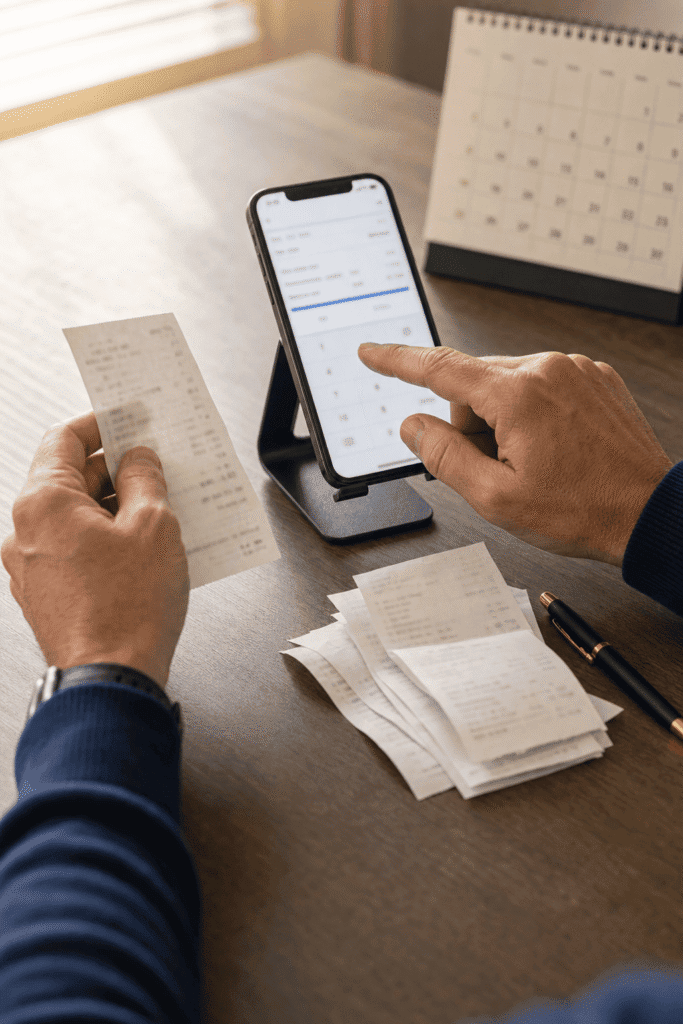
Making Tax Digital changes the picture from 2026
The legal position for sole traders hasn’t changed, but there are new reasons why using a business account is now more practical than using your personal account.
From April 2026, Making Tax Digital for Income Tax Self Assessment (MTD ITSA), HMRC’s new digital tax system, became mandatory for sole traders and landlords earning over £50,000 a year. Instead of one annual tax return, this means keeping digital records of every business transaction and sending HMRC a quarterly update every three months. Spreadsheets are still allowed, but only with specialist software that links them to HMRC automatically; copying figures across by hand no longer counts as a digital record.
The earnings threshold for this requirement drops to £30,000 in April 2027 and £20,000 in April 2028, so most working sole traders will be brought into the system within a couple of years. Once you’re included in the ITSA, a personal account holding both your weekly shop and your client invoices makes the required quarterly reporting far harder than it needs to be.
A separate business account keeps every transaction HMRC needs to see in one place, ready to feed straight into your accounting software. It doesn’t make a business account a legal requirement, but it makes the four-times-a-year admin considerably faster.
Can You use a Second Personal Account for Business?
Opening a second personal account is not the same as opening a business account. Most personal account terms rule out business use outright, so a bank can restrict or close an account that starts taking business-sized volumes, even if you don’t use it for personal transactions. A business account carries no such restriction.
It also does things a personal account cannot.
Taking card payments from customers.
Whether through a card machine or an online checkout, this needs a business account behind it, unless you route to an online account such as Paypal.
Building up a business credit history
Lenders look at that history when you apply for a loan or overdraft, not the record from a personal account used informally.
Easy connections with accounting software
And because a business account only ever holds business transactions, it connects far more cleanly to accounting software and to the quarterly reporting that ITSA now asks for, instead of mixing in your weekly shop with your supplier invoices.

What Is A Sole Trader Business Bank Account?
A sole trader business account is arguable no different from other business accounts. Banks offer to encourage sole proprietors to separate their finances, especially if the bank will not allow personal accounts for business use.
The features are the same as personal accounts; although, interest rates will be significantly lower and fees higher. There may be fewer financial perks, but your business will be able to access superior financial support and advice.
Are you a Sole Trader?
Sole traders are individuals who have set up and now run their own business, without incorporating a limited company. Sole proprietorships made up 3.2 million of the UK’s 5.7 million private sector businesses in 2025, 57% of the total, according to the government’s Business Population Estimates.
There are no rules with sole trader status which means you are unable to hire additional employees, without affecting your categorisation. Sole traders can include both single-person businesses and those that hire considerable teams.
What Is The Best Business Bank Account?
The right business bank account for you is very personal to your business. It will depend on your needs now and in the future. In order to assess what your business should look for in a bank account, it is best to look at what each provider is offering. Look beyond the monthly fees and see how much expertise is made available to you, this financial support is increasingly beneficial if you are looking to expand your business.
Get a Business Bank Account with AptPay
When it comes to business bank accounts, the big banks can take weeks to make an appointment and longer still to deem your various application forms acceptable. If you are a new Start-Up business, this process may be to no avail, as a lot of banks do not offer appointments to new businesses. This is not the case with AptPay.
We aim to help SMEs obtain competitive business bank accounts. At AptPay, our application process is simple. We believe in face-to-face meetings to help us provide you with the financial arrangements your business needs to grow and progress. There is no one-fit option, all of our business banking services are bespoke and tailored to you.
If you would like to arrange a meeting with our banking experts, call us on 0121 720 4020 or request a meeting online. With AptPay, your account can be up and running in a matter of days.
FAQ
What ID do you require to open a business bank account?
Setting up a business bank account requires the same documentation you would provide when opening a personal bank account; for example, photo ID and proof of address. We would also need to know your business’s details, including the registered name and address, date of incorporation, and company registration.
It can also be beneficial to provide your business plan, covering the size of your deposit within the account and your proposed turnover within the following year.
Does FSCS cover business bank accounts?
The Financial Services Compensation Scheme (FSCS) protects all money held within a bank account up to the limit of £120,000 per person, per financial institution. FSCS protections provide the reassurances that if your bank collapsed, you would receive some of your funds back through compensation. However, some business bank account providers do not provide this protection. In these instances, your cash will instead be covered by e-money regulations.
What are the tax rulings with business bank accounts?
For business accounts, owned by sole traders who pay themselves a salary, approximately 30% of your gross salary should be put aside for tax and national insurance contributions, as a basic-rate taxpayer. This percentage increases to 40%, if you are in a higher tax bracket. Most business accounts will offer you the possibility to set up a separate account where you can save and build up your tax.
If you are a limited company director, your tax affairs may be more complex. Corporation tax will instead be charged as opposed to income tax.
Should I hold money in a business bank account?
Leaving a set amount of funds in readiness for future expenses is always sensible. For sole traders, as all the money within the account is legally yours, it may be worth exploring the option of a savings account to benefit from better rates of interest.
I’m self-employed/a freelancer, do I need a business bank account?
Whilst it is not legally required for those who are self-employed or who are freelancers to have a business bank account, it may be worth you considering the other benefits they offer. If you have employees or are looking to expand to a team of people in the future, separate personal and business accounts will make it easier to manage your own payroll.
Furthermore, business bank accounts come with the additional benefits of loans and expert business support. Having access to these features available can help to support your business’s growth moving forward.