The term “business loan” covers a wide range of different products, and the right one depends on your trading history, how much you need, whether you can offer security, and how quickly you need the funds. This guide covers all of it: what’s available, what lenders assess, how to apply, and how to give yourself the best chance of being approved.
Types of business loan available in the UK
Bank loans are one option among many. For most SMEs, specialist alternative lenders are faster, more accessible, and better matched to how the business actually operates.
| Loan type | What it’s for |
|---|---|
| Unsecured business loans | A lump sum with no collateral required. Typically £5,000–£500,000. Faster decisions than secured products. Suited to businesses with at least 6–12 months of trading history that need funds for working capital, stock, or growth. |
| Secured business loans | Backed by an asset such as property or equipment. Lower rates than unsecured products and higher amounts possible, though the process takes longer and requires more documentation. Suited to businesses that can offer security and want the best available rate. |
| Merchant cash advance (MCA) | Revenue-based funding repaid as a percentage of card sales, with no fixed monthly payment. No hard credit check. Suited to businesses with consistent card revenue, typically £5,000–£10,000 per month minimum. |
| Asset finance | Funding tied to a specific asset (vehicle, machinery, equipment). The asset can often serve as its own security, making this accessible even for businesses with a short trading history. |
| Invoice finance | For businesses that sell B2B on credit terms. Unlocks cash from outstanding invoices, typically up to 90% of invoice value, without waiting for customers to pay. No property required as collateral. |
| Government-backed Start Up Loans | £500–£25,000 per director, up to £100,000 for a business with four or more directors. Requires a business plan and a credit check. Available via the British Business Bank for early-stage businesses that won’t yet qualify with commercial lenders. |
| Commercial mortgages | Long-term secured lending against commercial property. Suited to businesses buying or refinancing business premises, or property investors purchasing commercial assets. |
| Commercial bridging loans | Short-term property-backed finance for when speed matters: auction purchases, gap financing before a sale completes, or situations where a property needs work before it qualifies for a mortgage. |
| Fixed-fee business loans | Offered on a fixed-fee basis inspired by Islamic lending principles. The total cost is agreed upfront with no interest, which makes monthly costs predictable. Suited to businesses that want cost certainty or prefer to avoid interest-based products. |
What lenders look at when you apply
“Is it hard to get a business loan?”
The difficulty you’ll face depends on which lender you approach and which product you’re applying for. We explain what lenders look at in each case, so you can identify the most appropriate finance solution for your business.
Credit history (personal and business)
Bank lenders put heavy weight on credit score, both personal and business. Alternative lenders and MCA providers put less emphasis on credit history and more on current revenue and cash flow. A poor credit score does not rule out all business finance; it rules out certain products and lender types. See our guide to finance options without a hard credit check.
Trading history
Most commercial lenders need 6–24 months of trading accounts. MCA providers may accept 3–6 months of card sales history. Start-up loans are available to businesses with no trading history but require a detailed business plan. The shorter your trading history, the more important it is to show consistent, growing revenue.
Annual turnover and revenue
Banks typically require minimum annual turnover of £50,000–£100,000 for standard business loans. Alternative lenders may work from lower turnover. MCA providers assess monthly card revenue, typically £5,000–£10,000 minimum per month. Revenue consistency matters as much as the headline figure.
Affordability
Lenders check that repayments are serviceable given your business cash flow. Bank statements are almost always requested, and lenders look at how much cash the business retains after existing costs and obligations are covered.
Security or collateral
Secured products require an asset. Unsecured products and MCAs do not, though some lenders request a personal guarantee from a company director. A personal guarantee is not the same as using personal assets as security; it creates a personal obligation if the business cannot repay, so understand exactly what you’re signing before you do.
Business plan
Required for start-up loans and development finance. Less relevant for established businesses applying for unsecured products or MCAs, where your track record speaks for itself.
How to apply for a business loan: step by step
The process varies by product and lender type. This sequence gives you the best outcome across both bank and alternative routes.
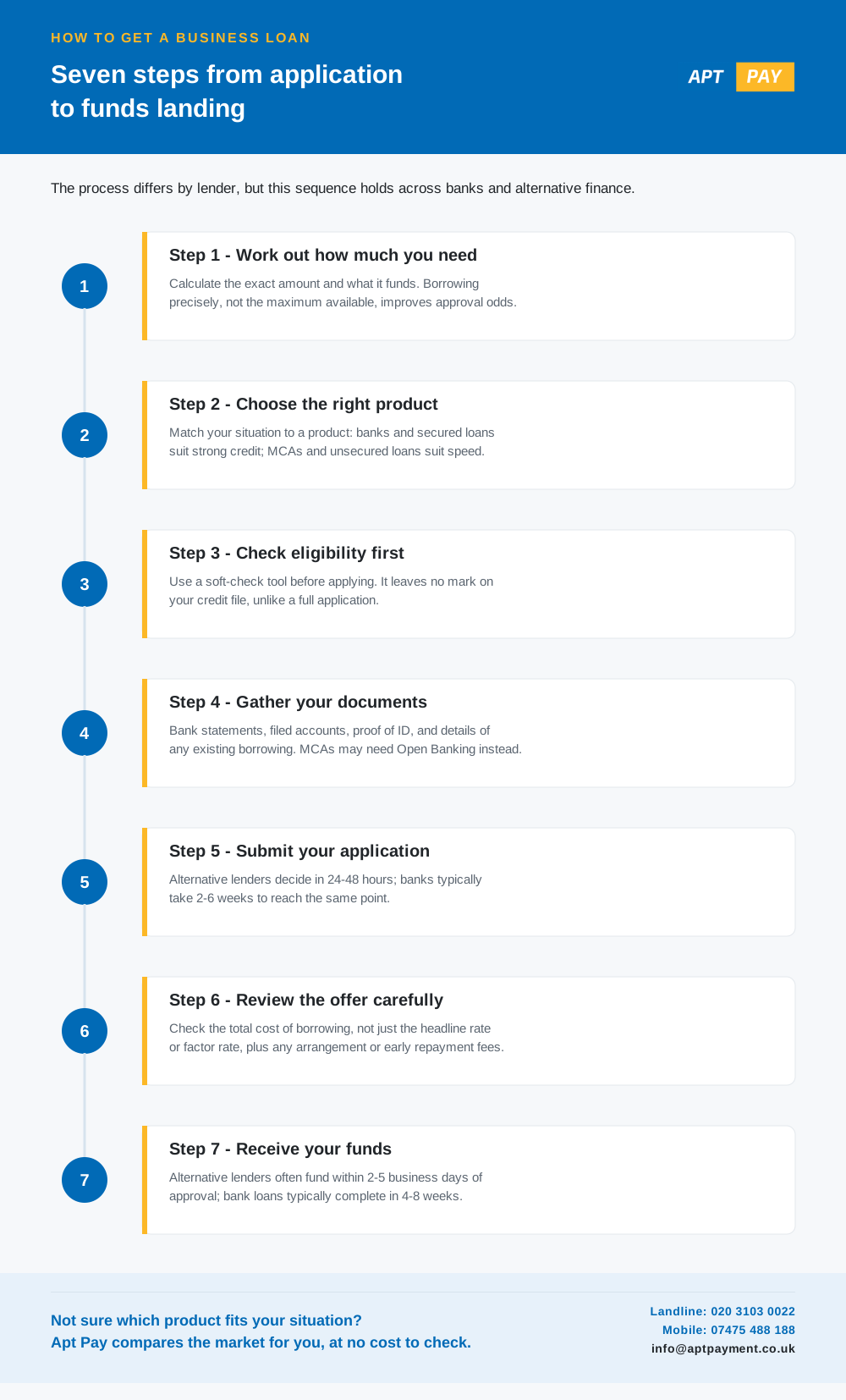
Step 1 — Work out how much you need
Calculate the specific amount and what it will fund. Borrowing exactly what you need, rather than the maximum available, improves approval chances, reduces cost, and makes repayments easier to manage.
Step 2 — Choose the right product for your situation
Use the table above to identify which product type fits. Banks and secured products suit businesses with strong credit and time to spare. Unsecured loans and MCAs suit businesses that need funds quickly or can’t offer collateral.
Step 3 — Check eligibility before applying
Most alternative lenders offer a soft-check eligibility check with no impact on your credit file. Use this before submitting a full application. Multiple hard credit searches in a short period can lower your credit score and raise concerns with future lenders.
Step 4 — Gather your documents
Typically required: 3–6 months of business bank statements; latest filed accounts; proof of business address and director identity; details of any existing borrowing. MCA and revenue-based products often need merchant statements or Open Banking access in place of accounts.
Step 5 — Submit your application
Bank applications typically take 2–6 weeks to process. Specialist alternative lenders can give decisions in 24–48 hours. MCA providers sometimes give a same-day decision via Open Banking. Faster decisions generally come with a higher cost of capital.
Step 6 — Review the offer carefully
Check the total cost of borrowing, not just the headline rate. For MCAs, check the factor rate and the repayment percentage. For fixed loans, check the APR (annual percentage rate, which is the effective annual cost including fees) and any early repayment or arrangement fees.
Step 7 — Receive funds
Bank loans typically complete 4–8 weeks from application. MCA and unsecured alternative lenders often fund within 2–5 business days of approval. If timing matters, say so upfront; some lenders can move faster when there’s a clear reason.
How much can you borrow?
Borrowing limits vary by product and lender. These are orientation figures; the actual amount available depends on your turnover, credit position, and the lender’s current appetite.
| Product | Typical range |
|---|---|
| Unsecured business loan | £5,000–£500,000. Most lenders expect annual turnover of at least 1.5x the loan amount. |
| Secured business loan | Typically up to £2m–£5m, depending on asset value. |
| Merchant cash advance | £5,000–£500,000. The advance is calibrated to monthly card revenue, often up to 1–1.5x monthly card takings. |
| Government-backed Start Up Loan | Maximum £25,000 per director; up to £100,000 for a business with four or more directors. |
| Commercial mortgage / bridging loan | Larger amounts, property-backed, with bridging loans available where you need the funds in advance |
| Turnover minimums (orientation) | Bank loans: £50,000+ annual turnover. Unsecured alternative loans: from £30,000+. MCA: £60,000–£120,000+ annual card revenue. |
Tips to improve your chances of being approved
Apply for the right product first
A well-matched application, with the right lender type and product for your situation, is more likely to succeed than an off-target one. If you have limited trading history or credit concerns, starting with unsecured or MCA products rather than going to a bank first protects your credit file and saves time.
Protect your credit file
Avoid multiple hard searches in a short period. Use soft-check eligibility tools first and only proceed with a full application once you have reasonable confidence. If you’re working with a broker, one application can reach multiple lenders without triggering multiple hard searches.
Get your accounts in order
Up-to-date, filed accounts remove a common objection at the underwriting stage. If your accounts show declining revenue, have a clear explanation and a forward plan ready; lenders respond better to context than to unexplained downturns.
Reduce existing borrowing before applying
High levels of existing debt reduce the amount a new lender will offer and increase the risk of a decline. If you have outstanding facilities, consider whether any can be cleared or reduced before applying for additional funding.
Borrow what you need, not the maximum available
Proportionate borrowing signals good financial planning. Applying for the maximum without a clear reason for that exact amount can raise questions in underwriting. Know your number and be ready to explain what it covers.
Use a specialist broker
A commercial finance broker has access to the full market of lenders and knows which providers are actively lending at what terms. This is particularly useful when your situation has any complexity: variable income, a short trading history, or prior credit issues. A broker compares lenders for you and presents your application to the most likely options, rather than leaving you to approach each one individually. Speak to Apt Pay to find out which products and lenders suit your business.
What if you have bad credit or no credit history?
A poor credit score does not mean business finance is unavailable. It means that traditional bank loans are unlikely, and that the right products are different ones. Revenue-based lenders, MCA providers, and specialist short-term lenders assess current business performance rather than credit history. A business with consistent card revenue and six months of trading can still access meaningful funding.
For a full guide to business finance without a hard credit check, including which lenders assess card sales instead of credit scores and who will lend when banks say no, see our dedicated guide: Business Loans with No Credit Check.
Contact AptPay to see what’s possible.
Frequently asked questions
Is it hard to get a business loan in the UK?
It depends on the lender and product. Bank loans are the hardest to access: tight credit criteria, long processes, and extensive documentation. Alternative lenders and MCA providers have simpler criteria and give decisions in 24–48 hours. For businesses with six or more months of trading and consistent revenue, approval rates through specialist alternative lenders are higher than through banks.
How much turnover do I need to get a business loan?
It varies by product. Bank loans typically require £50,000+ annual turnover. MCAs and alternative unsecured loans can work from £30,000–£60,000+. Government-backed Start Up Loans are available to pre-revenue businesses with a viable business plan. Use the table above as a starting point, then speak to a broker for a figure based on your actual situation.
Which business loan is easiest to get?
A merchant cash advance typically has the simplest eligibility criteria: three to six months of trading and consistent card revenue. No collateral, no hard credit check, no business plan required. Unsecured short-term loans from specialist alternative lenders are a close second.
Which bank gives business loans easily?
Banks are not the easiest route for most SMEs. They have the tightest criteria, the longest processes, and the most documentation requirements. Alternative lenders and specialist brokers offer faster, more accessible routes for the majority of SME borrowers, including those with strong trading performance but a less-than-perfect credit history.
Can I get a business loan as a sole trader?
Yes. Most lenders will consider sole traders, though the range of options may be narrower than for limited companies. MCAs and unsecured short-term loans are generally available to sole traders with consistent card or bank revenue.
Can I get a business loan with no trading history?
Government-backed Start Up Loans are available to pre-revenue businesses with a business plan. Commercial and alternative lenders, including MCA providers, typically need at least three to six months of trading. If you’ve just started, building three to six months of consistent revenue history first makes the application process much easier.